
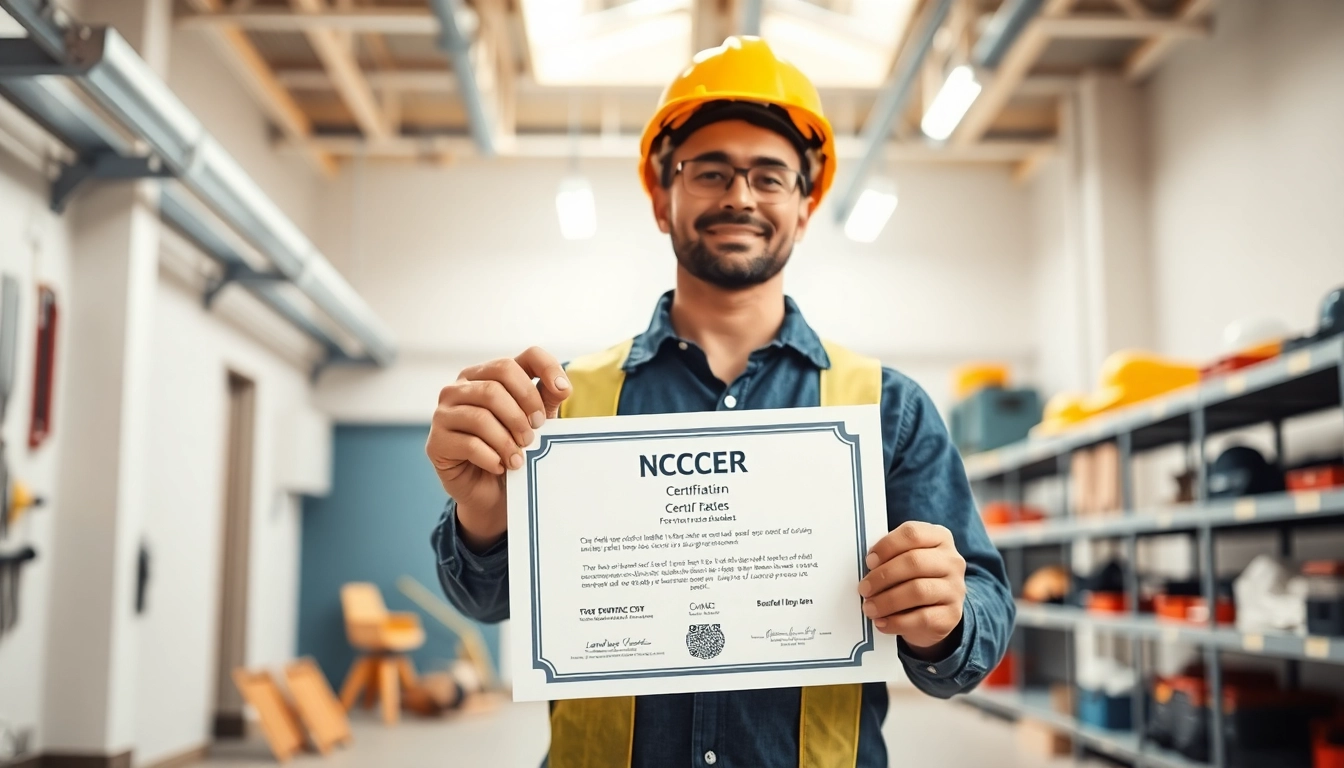
Understanding NCCER Certification
What is NCCER Certification?
The National Center for Construction Education and Research (NCCER) offers a certification recognized across various industries related to construction and maintenance. This certification program establishes standards for training and assessment, ensuring that individuals acquire the essential skills and knowledge required in today’s workforce. Aiming to enhance the competencies of thousands of workers, the nccer certification serves as a valuable credential for professionals committed to ongoing learning and excellence in their craft.
Importance of NCCER Certification in the Industry
NCCER certification is crucial in a highly competitive job market. It provides an industry-recognized credential that demonstrates a worker’s commitment to their profession and competency in their field. For employers, hiring certified professionals translates to reduced training costs, enhanced productivity, and improved safety on job sites. This certification positions individuals as more attractive candidates, especially when seeking employment in specialized sectors such as electrical, plumbing, welding, and heavy equipment operation.
Key Benefits of Obtaining NCCER Certification
The benefits of acquiring NCCER certification extend beyond mere job prospects. Key advantages include:
- Improved Job Opportunities: Employers often prefer certified candidates, making it easier to secure positions in sought-after fields.
- Higher Earning Potential: Certifications typically correlate with increased salaries, as employers value the specialized training and knowledge.
- Recognition and Credibility: Certification reflects a standardized level of knowledge, enhancing both personal and professional credibility.
- Continuous Learning: The NCCER program encourages ongoing education, facilitating career advancement and skills upgrade.
Steps to Achieve NCCER Certification
Prerequisites for NCCER Certification
Before pursuing NCCER certification, candidates must meet certain prerequisites. While specific requirements may vary depending on the certification level or specialty, common prerequisites include: a minimum age of 16 or older, a high school diploma or equivalent, and prior experience in the industry, which can be obtained through apprenticeships or relevant employment. This foundational experience ensures that candidates are adequately prepared for the coursework and assessments.
Enrollment Process for NCCER Programs
The enrollment process for NCCER programs involves several straightforward steps:
- Identify a sponsoring organization or training provider that offers NCCER courses in your area.
- Complete an application form providing required personal and educational details.
- Pay any associated enrollment fees, which may vary by provider.
- Attend pre-course orientation or information sessions if available.
Once enrolled, participants can access necessary materials and schedule their assessments as part of the certification journey.
Preparing for the NCCER Certification Exam
Effective exam preparation is vital for success. Candidates should follow these strategies:
- Study Materials: Utilize NCCER’s official curriculum and study guides that cover the necessary content areas.
- Practice Tests: Take advantage of practice exams to familiarize yourself with the exam format and question styles.
- Group Study Sessions: Collaborate with peers to strengthen understanding and retention of key concepts.
- Hands-On Experience: Engage in practical exercises to apply theoretical knowledge in real-world scenarios.
Advanced Insights into NCCER Certification
Specializations Available under NCCER
NCCER offers a variety of specializations tailored to diverse fields within the construction and maintenance sectors. Popular tracks include:
- Electrical: Covering basic and advanced electrical installation and systems.
- Welding: Focusing on fundamental welding techniques and safety procedures.
- Plumbing: Emphasizing installation, maintenance, and repair of plumbing systems.
- Carpentry: Teaching skills necessary for constructing and finishing structures.
Each specialization encompasses detailed coursework and assessments to ensure practitioners are industry-ready.
Understanding NCCER Skill Assessments
NCCER utilizes a comprehensive assessment system to evaluate the competencies of candidates. The assessments typically involve practical demonstrations alongside written exams. This dual-approach ensures that candidates not only possess theoretical knowledge but can also apply skills effectively in real-world scenarios. Each assessment is aligned with industry standards, providing a reliable benchmark of an individual’s abilities.
Secrets to Passing the NCCER Certification Exam
Passing the NCCER certification exam can be achieved with several strategic approaches:
- Understand the Format: Familiarize yourself with the structure of the exam, including question types and time limits.
- Focused Study: Concentrate more on topics where you feel less confident, allowing for targeted improvement.
- Regular Review: Consistently revisit material leading up to the exam to keep information fresh in your mind.
- Seek Feedback: Engage with instructors or peers to clarify doubts and enhance understanding.
Real-World Applications of NCCER Certification
How NCCER Certification Impacts Your Career
NCCER certification significantly impacts career trajectories by opening doors to advanced positions. Certified professionals often find enhanced job security, higher salary packages, and opportunities for leadership roles. Moreover, as skilled trades continue to be in high demand, certified individuals enjoy a competitive advantage when negotiating salaries or seeking promotions.
Success Stories from Certified Professionals
Many professionals attribute their career success to NCCER certification. Testimonials typically highlight how certification has helped them advance from entry-level positions to supervisory roles, enabling them to take on challenges and lead teams effectively. For instance, several individuals report enhanced job satisfaction and engagement after gaining certification, having felt a robust sense of accomplishment and skills mastery.
Networking Opportunities through NCCER Programs
NCCER programs foster networking opportunities that can be invaluable for career development. Participants often connect with fellow tradespeople, instructors, and industry professionals, creating a web of relationships that can lead to job leads, mentorships, and collaborative projects. Additionally, industry events and workshops organized around NCCER provide avenues for professional engagement and continuous learning.
Frequently Asked Questions About NCCER Certification
How long is NCCER Certification valid?
NCCER certification is valid for a period of three years. After this period, individuals must renew their certification by completing necessary continuing education or re-examinations to maintain their credential validity.
Can I renew my NCCER Certification?
Yes, NCCER certification can be renewed. Candidates can complete a renewal course or take a recertification exam to demonstrate their continued competency in their respective fields.
What fields benefit most from NCCER Certification?
NCCER certification benefits fields such as construction, electrical work, plumbing, welding, HVAC, and other skilled trades that require specialized training and expertise.
Are NCCER courses available online?
Yes, many NCCER courses are offered online through various training providers. This flexibility allows candidates to learn at their own pace and access materials from anywhere.
What is the cost associated with NCCER Certification?
The cost of NCCER certification varies depending on the training provider and the specific courses taken. Generally, prices include course fees, exam fees, and study materials, which can range from a few hundred to over a thousand dollars.